From a lead list to a booked meeting
4 min read
Picture a founder finishing a search with twenty people worth talking to. The next piece of work is already waiting: choose where to reach them, write the first message, remember who replied, answer questions, and find a time to meet. The list is useful. There is still a lot between that list and a conversation on the calendar.
Talona handles that work as one connected process. You describe who you want to reach and connect your accounts. The agent carries the context through discovery, conversations, and booking in the background. Here is how those steps fit together.
Why discovery comes first
Every later step depends on the choice of person. An outreach message inherits the assumptions made during research. A follow-up carries those assumptions further. Getting the initial match right gives the rest of the work a useful foundation.
For us, that means understanding the product, the ICP, and the events that could make the timing relevant. A list should explain why each person belongs in it. That is valuable to a founder today, even when they handle the first conversations themselves.
Talona researches whether the people fit, whether the sources support the reasoning, and whether the contact details are usable. Those checks give the agent context for the relationship that follows, and give the founder a way to understand each match.
Carry the context into the next step
When a lead moves into outreach, the reason it was found should travel with it. The agent needs the relevant signal, the problem your product addresses, and the evidence behind the match. Otherwise, useful research can turn into a message that could have been sent to anyone.
You set a goal or a campaign around that context. For example, reach people leaders at companies expanding into new locations. The agent uses the same criteria to find the people, prepare the approach, and decide which replies need attention.
The proposed message should stay within what is known about the company and your product. If the research suggests a possible problem, the conversation can ask about it. It does not need to present an inference as a fact.
A conversation needs memory
Consider a reply that says, “We are interested, but the person handling this starts next month.” That changes the next useful action. A scheduled reminder alone does not capture the new person, the timing, or what was agreed.
Talona keeps track of those changes and uses them to decide what to do next. A question needs an answer. An agreed follow-up needs the right date. A clear decline ends the outreach. A request outside the agent’s knowledge needs a handoff to the founder.
That history follows the person across connected channels. If a lead answers by email after an introduction on LinkedIn, Talona continues with the context of the earlier conversation.
Work where the conversation happens
Talona works through the accounts a user connects, including LinkedIn, X, and email. The choice of channel should fit the person and the conversation. Connecting another account should give the agent another useful place to work.
Talona uses the interfaces where those conversations already happen. A founder can connect the accounts they use for their business and give the agent a focused job: find relevant people, start a useful conversation, and arrange a call when they agree.
Each channel has its own permissions and rules. The agent needs the current conversation and the result of its last action to continue appropriately. A failed message should not be treated as delivered, and a request to stop should end the outreach.
Make the booking something you can verify
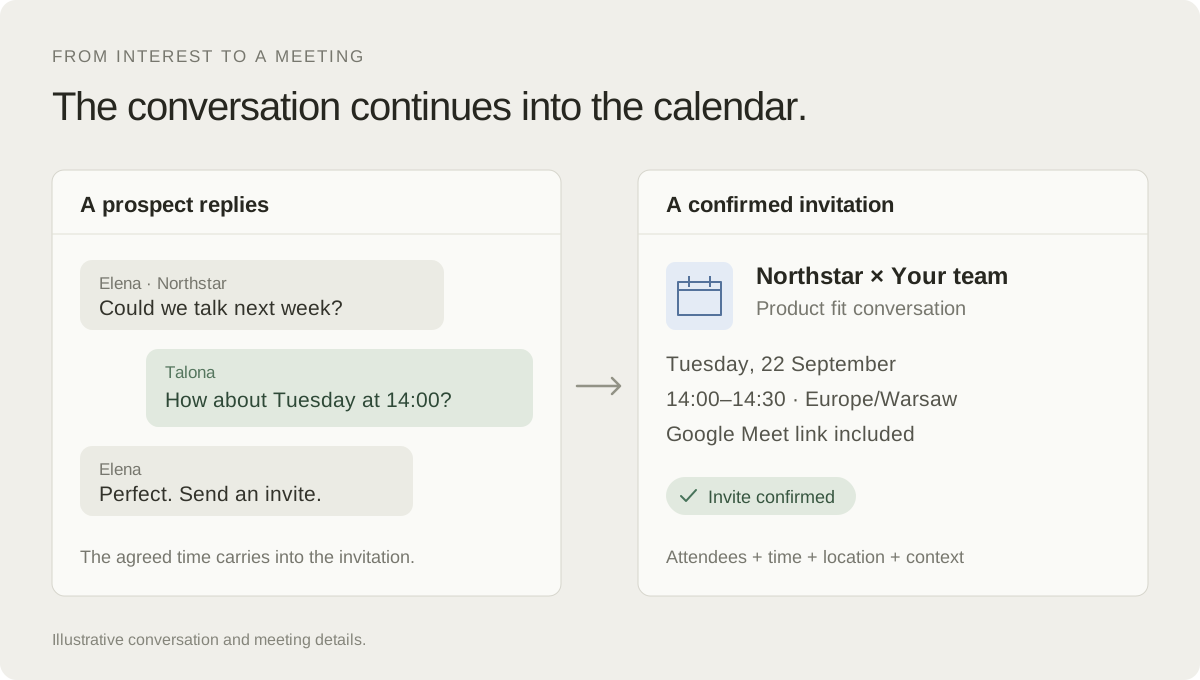
A positive reply moves the conversation forward. A booked meeting requires agreement on a time and an invitation with the right details. The agent should be able to distinguish those stages and describe the actual result.
- An agreed date, time zone, and duration.
- The correct attendees and a calendar invitation.
- A working meeting location, such as a Google Meet link.
- A brief explaining the lead, the conversation, and what they want to discuss.
The handoff should make the meeting easier to attend. A founder opening the calendar needs to know why this person is there and what has already been said. Keeping that context avoids spending the first part of the call reconstructing the outreach.
Keep the goal visible as the agent works
A proactive agent needs a clear goal and boundaries around its work. The user should be able to choose an audience, connect the accounts it can use, set a budget, and pause or revise a campaign. The agent should bring back progress and decisions that need attention.
For an early-stage founder, those decisions are part of learning who the product is for. Replies can reveal a different buyer, a missing feature, or a problem described in language the team had not considered. We want the agent to preserve those lessons and make the next search better.
Talona connects autonomous outreach, conversation management, and booking to finding relevant leads with useful context. That is how we put our vision into practice: giving founders and small teams more time to build, while an agent brings the right conversations to them.